EXPERT ADVICE
Bathroom extractor fan buying guide: types, sizing, costs and building regs
Updated 07/26

By: Laura Macdonald
Reviewed: Alex Peters
Keep your bathroom free of condensation and damp with the right choice of extractor fan. Learn about types, features to look for, and costs in our complete bathroom extractor fan buying guide.
Which type of extractor fan suits your bathroom
How to size a fan correctly for your space
What UK building regulations actually require
Where to position a fan for the best results
How much installation typically costs
How to keep a fan running efficiently for longer
A bathroom extractor fan is one of the least glamorous purchases you'll make for your home, and one of the most important.
Without one, steam and moisture have nowhere to go except into your walls, ceilings, and grout, where they turn into condensation, mould, and expensive repair bills.
This guide covers everything you need to choose the right fan: the different types available, how to size one correctly, what UK building regulations require, and what installation costs to expect.
Want some help from a trained tradesperson? Why not get in touch today!
Find checked electricians near you
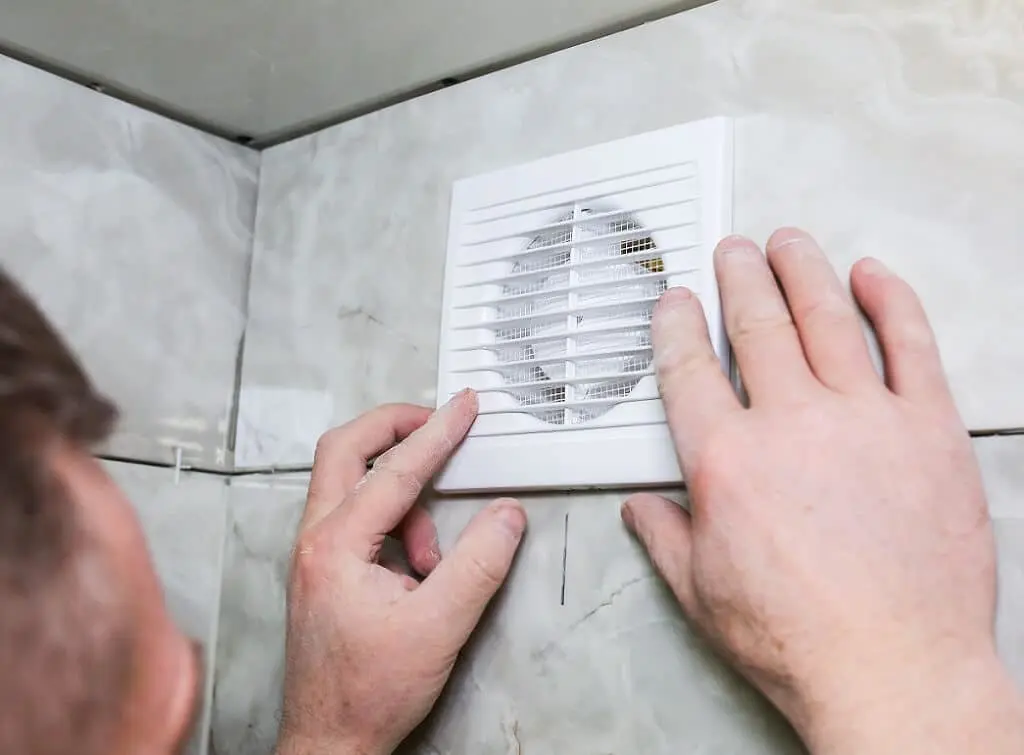
Why bathrooms need extractor fans
Every time someone showers or runs a hot bath, the room fills with warm, moisture-laden air.
Left unchecked, that moisture settles on cold surfaces (tiles, ceilings, window frames) as condensation, which is the single biggest cause of bathroom mould.
A properly sized extractor fan pulls that moist air out before it has the chance to condense, which:
Reduces odours and improves overall air quality
Prevents condensation building up on walls and ceilings
Protects paintwork, plaster, and grout from long-term damp damage
Helps meet UK ventilation regulations for bathrooms without a window
Run your fan for at least 15-20 minutes after a shower or bath, not just during it. Most of the moisture lingers in the air after you've finished, so a run-on timer is worth having if your fan doesn't include one.
Types of bathroom extractor fan
There are three main types of extractor fan used in UK bathrooms. Which one you need mostly comes down to how far the fan needs to push air before it reaches the outside.
Axial fans
Axial fans are the most common choice for UK bathrooms. They're compact, straightforward to install, and budget-friendly, making them well suited to smaller bathrooms with a short duct run of up to around 2-3m that vents directly through a wall or window.
Centrifugal fans
Centrifugal fans are more powerful and better suited to larger or poorly ventilated spaces. They're the better choice if your bathroom has a longer duct run (more than around 1.5m from an external wall) or needs to vent through the ceiling rather than a wall.
That extra power does mean centrifugal fans tend to run a little noisier than axial models.
Inline fans
Inline fans are less common and are typically installed out of sight in the loft space, connected to the bathroom via ducting.
They're the preferred option for long duct runs where the bathroom is a considerable distance from an external wall.
Their higher extraction rate and more involved installation make them the more expensive option of the three, but positioning the motor away from the room itself also makes them noticeably quieter in use.

Not sure which type suits your setup, or want help with installation costs? A qualified electrician can assess your bathroom and duct run properly, and any new wiring will need to meet Part P requirements regardless of which fan you choose.
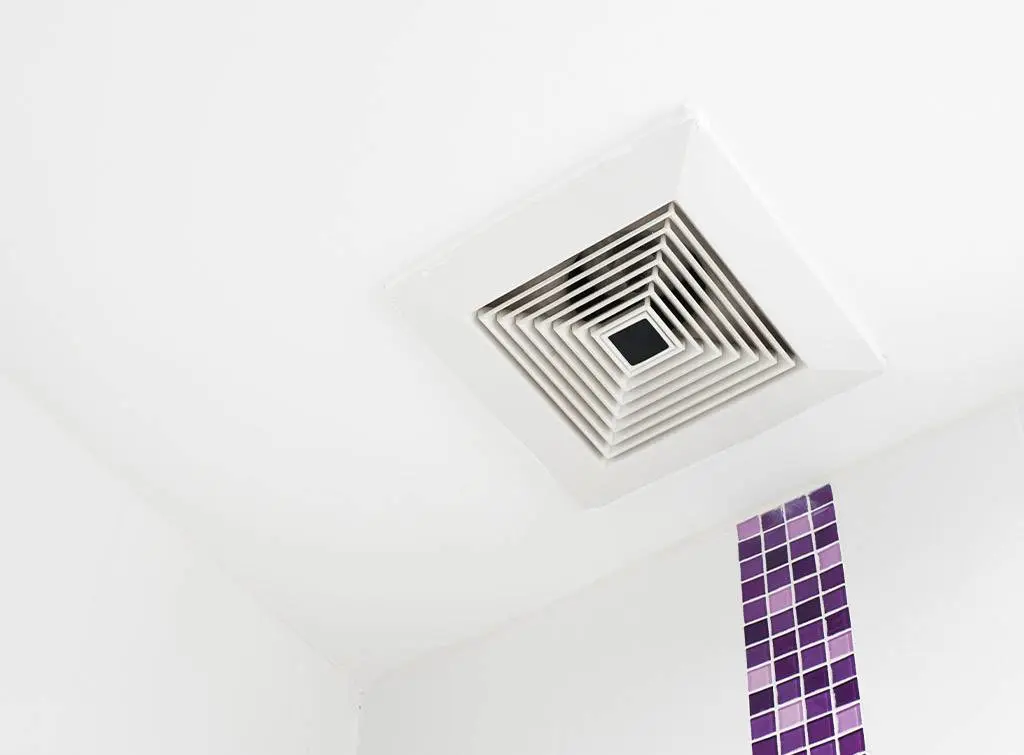
How to size an extractor fan for your bathroom
Getting the extraction rate right matters more than most people expect. A fan that's too weak simply won't shift the moisture; running an oversized fan longer than necessary just wastes electricity.
To work out roughly what you need:
Calculate your bathroom's volume in cubic metres: length x width x height
As a rough guide, aim for an extraction rate of around 85m³/h for a small space such as an ensuite or shower room, rising to around 230m³/h for a larger family bathroom
UK Building Regulations Approved Document F set the legal minimum extraction rates, and these are worth knowing even as a homeowner, since any installer you hire will need to meet them:
Intermittent fans (the most common type, switched on with the light or a humidity sensor): minimum 15 litres per second
Continuous fans (running constantly at low speed, boosting when needed): minimum 8 litres per second
A fan that only just meets the legal minimum will pass an inspection, but many homeowners find a slightly higher-rated fan clears steam faster and copes better in bathrooms with a bath, shower, and no window.
If you're replacing a fan that never quite kept up with condensation, sizing up slightly (rather than buying a like-for-like replacement) is often the fix.

What else to look for when choosing a fan
Beyond extraction rate, a handful of other features make a real difference to how much you'll actually enjoy (or forget about) your extractor fan.
Noise levels
As a general rule, axial fans run quieter than centrifugal fans.
It's possible to find super-quiet models rated as low as 16 dB, which is worth considering for an ensuite next to a bedroom, though anything under 30 dB is generally considered quiet enough for most households.
Energy efficiency
Modern, eco-friendly fans are usually labelled as such and are easy to spot. Otherwise, look for:
Lower power consumption: most fans range from around 5W to 35W
Timer controls: to limit how long the fan runs after use
Humidity sensors: a humidistat measures air moisture and switches the fan on automatically when it's needed
Size and style
A 4-inch (100mm) extractor fan is normally enough for a standard-sized bathroom up to around 9m², while a 6-inch (150mm) fan suits larger or more frequently used bathrooms.
Style-wise, fans have moved well beyond plain white: chrome, matte black, and even gold finishes are now widely available if you want the fan to blend into your bathroom design rather than stand out.
Controls: manual, sensor, or timer
Fans can be switched manually via a pull cord, wired to come on with the light switch, triggered automatically by a humidity sensor, or set to run on a timer after use.
Many modern fans combine two or more of these, for example a light-switch trigger plus a run-on timer, which suits most households without any extra thought needed day to day.
Safety and IP rating
The IPX rating measures how resistant a fan is to water and moisture ingress, which matters more in a bathroom than almost anywhere else in the house.
Extractor fans for bathrooms must have a minimum rating of IPX4 (splashproof), suitable for general bathroom use around showers and baths
Fans installed inside or directly above a shower or bath (Zone 0) need a higher rating of IP67
Fans in Zones 1 and 2 (the wider splash zone around the bath or shower) need at least IPX4
Bathroom circuits also require RCD protection, and any new wiring counts as notifiable electrical work under Part P, so it needs to be carried out or certified by a registered electrician.

On Checkatrade, you'll only find trades who meet our high standards and pass up to 12 checks.
Find qualified electricians working in your area
Where to position your extractor fan
Positioning has a bigger impact on performance than most people realise.
Get it right and the fan does its job quietly in the background; get it wrong and you'll still find condensation on the mirror no matter how powerful the fan is.
Fit the fan as close as possible to the source of steam, ideally in the space between the shower or bath and the door
Mount it as high as practical, no more than 400mm below the ceiling, since warm, moist air rises
Avoid unnecessary bends in the ducting: each 90-degree bend increases the risk of condensation building up inside the duct and dripping back into the fan
Use insulated ducting for any run through a cold loft space, and make sure the duct slopes slightly downward towards the outside to help any condensation drain away rather than pooling

How to install an extractor fan through a wall
Looking to install an extractor fan through a wall? Follow this expert guide to learn how to complete this job to a professional standard.
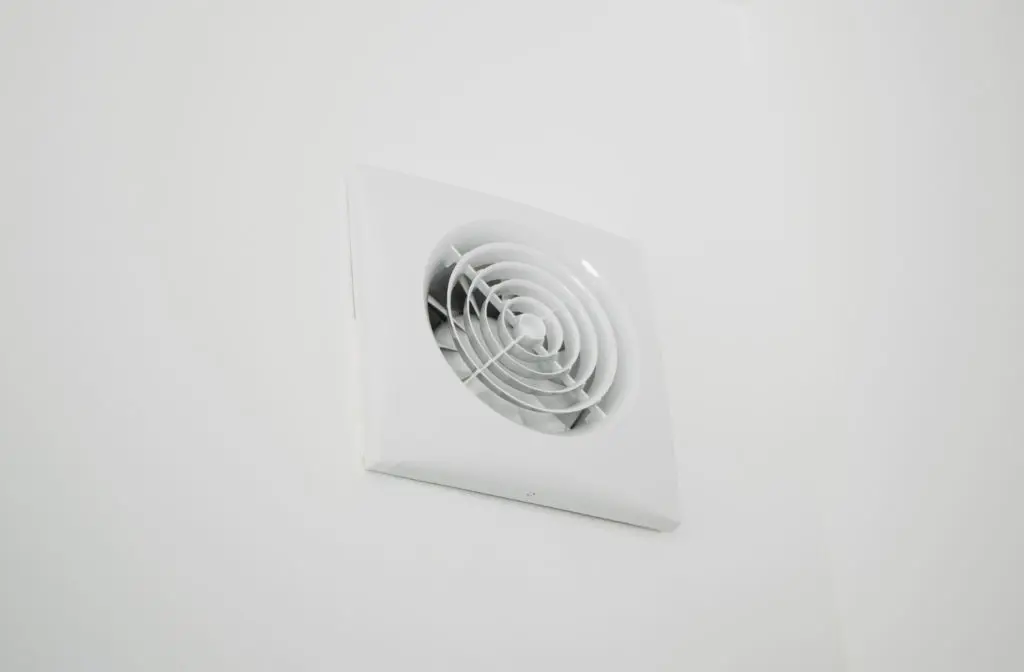
How much does a bathroom extractor fan cost?
Costs vary depending on the fan itself, whether you're replacing an existing unit or installing one from scratch, and how much rewiring or new ducting is involved.
As a general guide, replacing an existing fan is a simpler job than a brand-new installation, since the wiring, ducting, and external vent are usually already in place. Installing a fan where there wasn't one before costs more, largely because of the new ductwork and external grille required.
For a full breakdown of unit prices, installation labour, and what affects the total cost, see our dedicated cost guide.
Running costs are generally low. Modern, energy-efficient fans are inexpensive to operate, and leaving a fan on longer than necessary doesn't improve ventilation. A model with a humidity sensor or run-on timer is the more efficient choice long-term.
Job Estimate Calculator

Finding a tradesperson to install your extractor fan
Hiring a qualified electrician is strongly recommended for bathroom extractor fan installation, and for anything beyond a straightforward like-for-like swap, it's effectively essential.
Bathrooms are classed as "special locations" under UK electrical safety rules because of the proximity of water and electrics, so a registered electrician will:
Ensure the installation is wired safely and correctly, including RCD protection
Know the current building regulations for bathroom ventilation and IP ratings
Certify the work where required under Part P, which matters if you come to sell the property
Confirm ducting and positioning will actually achieve the extraction rate you're paying for

Keeping your extractor fan running well
A fan that's never cleaned gradually loses performance, even if it seems to be running fine. Dust and grime build up on the blades and housing, which can make the fan louder, less effective, and shorten its working life.
Wipe down the visible cover and grille every month or so to stop dust building up
Give the blades, housing, and ducting a deeper clean every 3-6 months
Watch for signs it needs attention: increased noise, lingering dampness after use, or visible dirt on the blades
If cleaning doesn't solve a noisy or underperforming fan, the issue is more likely to be a blocked duct, a fault with the wiring, or a unit that was undersized for the room in the first place.
Any of these are worth getting checked by an electrician rather than living with.
Checklist before you get an extractor fan installed

Extractor fan checklist
Look for local electricians near you
Enter your postcode to find a top tradesperson near you
Ges Electrical Services Ltd
10.00
(30 reviews)Services & skills
ElectricianElectrical ContractorsElectric CookersExtractor FansElectric ShowersArc Electrical
10.00
(24 reviews)Services & skills
ElectricianElectric CookersElectrical ContractorsEmergency Electrician ServiceElectric SocketsLondon Live Electrical
10.00
(18 reviews)Services & skills
ElectricianElectrical ContractorsFuseboard / Consumer Unit InstallationHouse RewiringElectric RadiatorsMark Knowles Electrical
10.00
(47 reviews)Services & skills
ElectricianElectrical ContractorsGarden LightingElectrical Under Floor Heating InstallationFault FindingWhat Electrics! Ltd
10.00
(66 reviews)Services & skills
ElectricianElectrical ContractorsImmersion Heater InstallationElectric Gate WiringHouse RewiringJRG Electrical
10.00
(146 reviews)Services & skills
ElectricianElectrical ContractorsElectric Gate WiringHouse RewiringElectric Sockets


FAQs about extractor fans
Axial fans suit smaller bathrooms with short duct runs, while centrifugal and inline fans are better suited to larger spaces or more complex installations with longer ducting.
Not strictly, if the window opens. However, an extractor fan gives a far more consistent method of ventilation than relying on someone remembering to open a window, and new builds require mechanical ventilation regardless of window provision.
Multiply the room's length, width, and height in metres to get the volume in cubic metres. A 3 x 2.5 x 2.4m bathroom, for example, works out at 18m³.
Building regulations set minimum extraction rates in litres per second (15 l/s for intermittent fans), but many installers will also convert this to a cubic-metres-per-hour figure that's easier to match against a fan's stated specification. An electrician can confirm the right rate for your exact bathroom.
Yes, a correctly sized and positioned fan is one of the most effective ways to prevent bathroom mould, since it removes moist air before it has the chance to settle and condense on cold surfaces. If mould is already established, though, you may also need to treat it directly.
Fans rated under 30 dB are generally considered quiet, with some models rated as low as 16 dB. Axial fans tend to run quieter than centrifugal fans of a similar extraction rate.
Replacing an existing fan is typically cheaper than installing one from scratch, since the wiring and ducting are usually already in place. See our extractor fan installation cost guide for current pricing.
Yes. Any new electrical wiring for a bathroom extractor fan counts as notifiable work under Part P of the Building Regulations, and must be carried out or certified by a registered electrician.
Axial fans suit smaller bathrooms with short, direct duct runs. Centrifugal fans generate more airflow pressure, making them better suited to longer duct runs or bathrooms without a nearby external wall.
A straightforward like-for-like replacement, where the wiring and ducting are already in place, is sometimes manageable as a DIY job, though it's still worth having an electrician check it afterwards. Any new wiring or ducting should be done by a qualified electrician to stay compliant and safe.
This usually points to a blocked or undersized fan, a duct run with too many bends, or a fan that isn't running for long enough after use. A run-on timer often solves the latter.
As close as possible to the source of steam, ideally in the space between the shower or bath and the door, and mounted as high as practical (no more than 400mm below the ceiling).
Yes, roughly every 3-6 months for a deeper clean, with a quick wipe of the visible cover monthly to stop dust building up and affecting performance.




See the tradespeople we've checked for your job